


Nestled into the stunning mountains and highlands of Peru’s Sacred Valley of the Incas– well-known for its historic ruins, Andean landscapes and iconic weavers that remains alive in its communities. Chinchero Peru, “Birthplace of the Rainbow,” is one of the most fascinating destinations in the Sacred Valley of the Incas. Here, you can visit Inca archaeological remains, a colonial church built on pre-Hispanic foundations, ancient agricultural terraces, and textile centers where a tradition passed down through generations is still preserved. Read about charming village of Chinchero, which can be included on any private, tailormade trip to Peru with Peru Spirit Adventure.
What is Chinchero?
Chinchero is a traditional Andean village located in the Andes between Cusco and Urubamba, in the Sacred Valley region of Peru. Known as the “Land of the Rainbow,” it is situated at an altitude of approximately 3,760 meters (12,340 feet), the village offers spectacular views of snowcapped mountains of the Andes, agricultural terraces, and nearby valleys.
Chinchero is part of one of the most visited routes to the Sacred Valley. It is located about 30 kilometers (19 miles) from the city of Cusco, which is why it is often visited on a half-day excursion or as part of a Sacred Valley tour as well as on a Chinchero to Urquillos trek. The Chinchero Archaeological Park is part of Peru’s cultural heritage and is one of the district’s most important historical spaces.
This picturesque town is renowned for its rich cultural, archaeological park, and natural heritage, as well as colonial church, agricultural terraces, artisan fair, and textile centers, where traditional weaving techniques, natural dyeing, and the use of Andean fibers are demonstrated. It is also famous for preserving many aspects of Quechua culture, including weaving traditions, agricultural practices, and local customs that date back centuries. Unlike more heavily visited destinations, Chinchero still feels deeply connected to everyday Andean life.
Many travelers know Chinchero, Peru, for its vibrant textile markets and weaving cooperatives, where local artisans demonstrate natural dyeing and traditional weaving methods passed down through generations.
What does Chinchero mean?
The place name “Chinchero” originates from the Quechua terms “Chinchiru” or “Chincherq’u.” From an etymological perspective, the most widely accepted interpretation—found both in popular usage and local oral tradition—links the name to the term “Chinchay,” which which refers to a significant feline in Andean cosmology. It is also known by names like “jacacho,” “jacallo,” or “jacaho,” which refer to a sacred bird that, according to tradition, would sing to predict rain and good harvests.
History of Chinchero and Andean Tradition
Chinchero was an important place during the Inca Empire. According to official cultural information, during the reign of Tupac Inca Yupanqui, the village became an important royal estate and agricultural center. The Incas constructed terraces, ceremonial buildings, bath, and irrigation systems that are still visible today.
The archaeological park preserves pre-Hispanic paths, enclosures, terraces, water channels, huacas, and shrines. These elements show that Chinchero was not only an agricultural area, but also a residential, ceremonial, and administrative space linked to the Inca nobility as well as spiritual importance because of its commanding position over the Sacred Valley and nearby trade routes. Chinchero was also connected to the wider Inca road network, the Qapaq Ñan, which linked major cities across the empire.
After the arrival of the Spaniards, the place maintained its importance. Colonial structures were built over ancient Inca structures, including the town’s main church, a common practice throughout Peru. This blend can be especially seen in the town center, where Inca walls coexist with colonial buildings. One of the best examples is the white colonial church in Chinchero’s main plaza, the Church of Nuestra Señora de Monserrat, built in the 16th century over the foundation of the Inca palace belonging to the ruler Tupac Yupanqui. Preserved to this day outside the church is a looming ancient Inca wall peppered with ten trapezoidal niches.
Pre-Inca Period
Chinchero was inhabited by the Ayllu Pongo and Cuper Ayllu groups, which were part of the Ayarmaca ethnic group. Today, these groups continue to exist as rural communities. Ayllu Pongo is located to the south and southwest of Chinchero. The Cuper Ayllu, meanwhile, is located to the northeast, occupying the southeastern shore of Lake Piuray and extending to the highlands of Anataquilca and Sauco.
Inca Period
During the Inca period, Chinchero became part of the personal lands of Túpac Inca Yupanqui, who ordered the construction of the Inca city in Chinchero, Cusco. In 1536, after clashing with the Spanish at Lake Piuray, Manco Inca retreated to the Yucay Valley and then to Ollantaytambo, setting fire to the palaces of Chinchero to prevent the Spanish from resupplying and capturing him.
Colonial Period
With the arrival of the Spanish in 1533, Chinchero underwent significant changes, including the establishment of the encomiendas. Viceroy Francisco de Toledo carried out the reduction of the indigenous population and ordered the construction of the colonial church of Monserrat. In 1572, the town of Nuestra Señora de Monserrat was founded on the site of the ancient Inca settlement, consolidating the ayllus of Cuper, Pongo, and Yanacona into a single urban center.
Chinchero Today
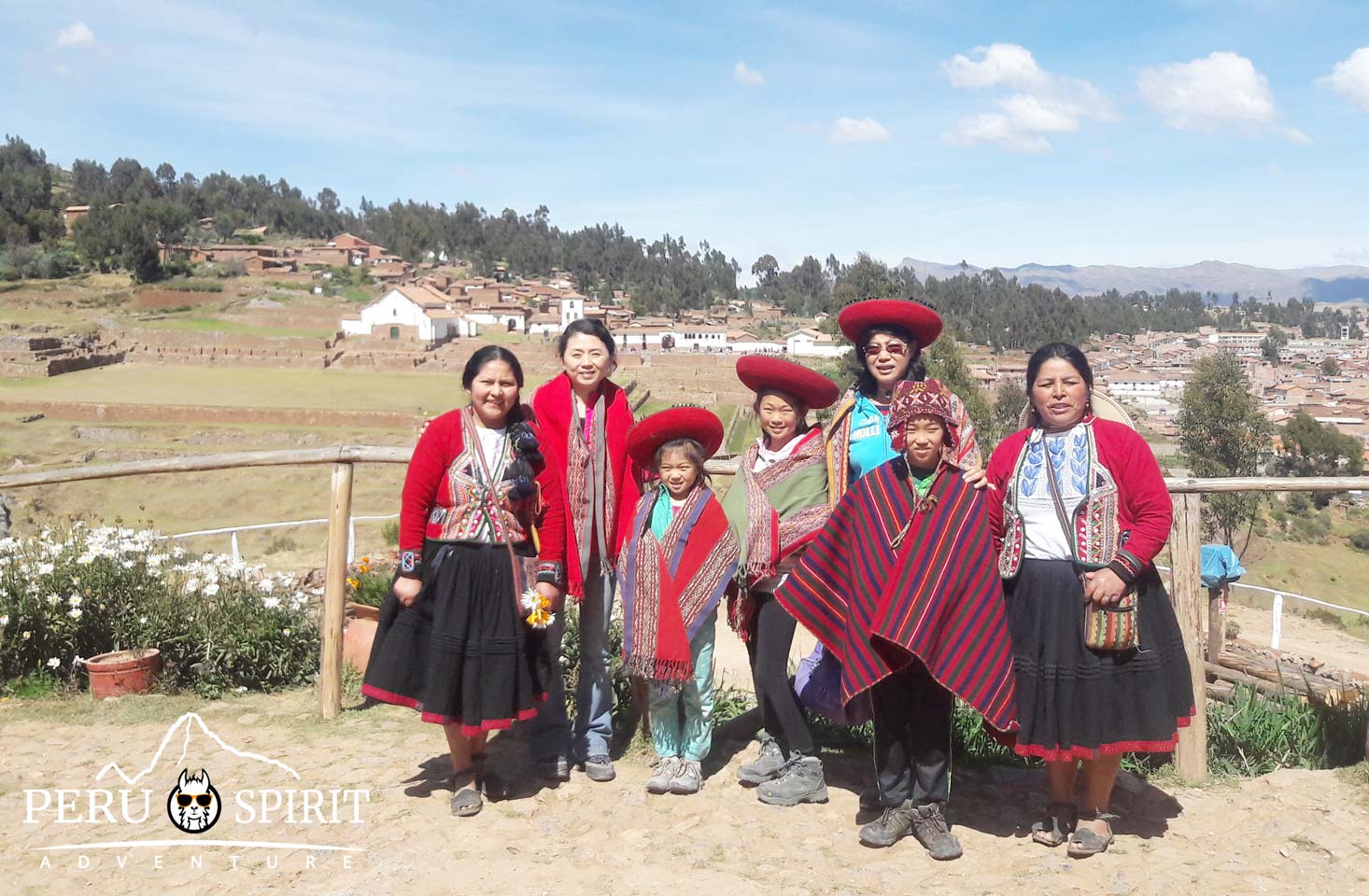
Chinchero village, in Peru, preserves a remarkable blend of Inca and colonial architecture. Its economy is based on textile crafts, with production centers that keep local traditions and customs alive. The communities are still organized according to the Inca system of ayllus, led by various community leaders, and continue to practice barter while celebrating various festivals. Visitors can hear Quechua spoken in the streets, observe traditional farming techniques, and participate in cultural exchanges with local communities.
Cultural Importance in the Sacred Valley
Chinchero remains one of the most culturally authentic destinations in the Sacred Valley. Its importance lies not only in its archaeological remains, but also in its intangible heritage: textiles, the Quechua language, festivities, traditional agriculture, barter, and community practices.
The Decentralized Directorate of Culture of Cusco highlights that Chinchero preserves knowledge, techniques, and practices passed down from generation to generation, especially in textile art, where symbols of Inca culture are maintained and natural dyes are used. Travelers visiting the Sacred Valley often stop here to explore archaeological remains, learn about ancestral textile techniques, and experience local Andean culture that continues to thrive today.
Location and How to Get to Chinchero
The Andean town of Chinchero is located in the province of Urubamba, Cusco region. From Cusco, you can reach it by the paved road that connects the city with Chinchero and continues toward Urubamba and Ollantaytambo, in the Sacred Valley.
Distance from Cusco
The approximate distance between Cusco and Chinchero is about 30 kilometers (18.6 miles). Travel time is usually about 45 minutes to 1 hour via private car or taxi, depending on traffic, type of transportation, and stops along the way.
Location of the Chinchero Archaeological Site
Chinchero is located before the descent into the Sacred Valley of the Incas, in the province of Urubamba, in the Cusco region (Peru). It is situated approximately 28–30 km northwest of the city of Cusco—a drive of about 40 to 60 minutes, depending on the route taken and traffic conditions. Chinchero sits at an elevation of 12,500 feet (3,762 m), 1300 feet (362m) higher than Cusco
El clima varía según la región de Cusco y presenta dos estaciones bien definidas: la temporada de lluvias, de noviembre a abril, y la temporada seca, entre los meses de mayo y octubre. Se registra una temperatura máxima de 18,5 °C —con un promedio anual de 16 °C— y una mínima de -6 °C —con un promedio anual de 0 °C—, mientras que la precipitación anual alcanza los 4533 mm.
 Chinchero Peru
History of the Chinchero
Pre-Inca History and Incorporation into the Inca Empire: Before the Incas arrived, the Killke culture inhabited Chinchero, where its people were primarily engaged in agriculture and camelid herding. Later, this territory was incorporated into the Tahuantinsuyo, acquiring great political and residential significance. The Inca Túpac Yupanqui established a royal residence in the area and ordered the construction of enclosures, terraces, stone steps, and irrigation systems. These structures facilitated agricultural and livestock activities, enabling the cultivation of crops such as potatoes, olluco, oca, quinoa, and fava beans, which transformed Chinchero into a prominent residential and productive center within the Inca Empire.
Arrival of the Spaniards: In 1536, during the resistance led by Manco Inca, a fire broke out at the royal estate associated with Túpac Yupanqui. This event caused significant damage to the Inca complex and led to a period of depopulation. Later, the Andean ayllus returned to the region.
Colonial Era: The Spaniards made use of the existing Inca structures and built new buildings on top of them. A notable example is the Church of the Virgin of the Nativity, which was erected on Inca foundations and adorned with works from the Cusco School. Tensions also arose between the ayllus and the landowners over control of the land, although some communities managed to recover part of their territories through titles recognized by the Crown.
Republican Era: Communities continued to use traditional forms of organization and maintained collective land use, despite the persistent presence of large landowners. With the Agrarian Reform of 1969–1970, spearheaded by Juan Velasco Alvarado, numerous estates were expropriated and the land was transferred to peasant organizations and cooperatives.
Current Events: The sale of communal land for the new Cusco airport project has reignited debates about the ownership, use, and future of the land in Chinchero.
Chinchero as an Archaeological and Cultural Heritage Site
Chinchero is home to significant Inca archaeological remains, including the Inca Palace, walls, terraces, and irrigation systems, all of which attest to its importance during the Tahuantinsuyo. Also noteworthy is the blend of Inca and colonial architecture, particularly in the plaza and the church that stands atop the ancient Inca complex.
Chinchero’s heritage encompasses living traditions, such as the Sunday market, textile production, handicrafts, traditional clothing, and agricultural practices, which have been passed down through generations.
Today, Chinchero is significant for its integration of history, archaeology, landscape, and Andean culture. Its location in the Sacred Valley, adjacent to Lake Piuray and the mountains revered as Apus, reinforces its importance as part of the cultural heritage of Cusco and the Andean world.
What to See and Do at the Chinchero Archaeological Site?
The town of Chinchero is a notable attraction in the Sacred Valley of the Incas, recognized for its rich cultural and archaeological heritage. Here, one can see:
Túpac Yupanqui Palace : One of the main attractions is the Túpac Yupanqui Palace. Near the main square, a significant section of an Inca wall with trapezoidal niches—which was part of the ancient complex—is still preserved. Terraces, walls, and other structures can also be seen, offering a glimpse into Inca urban design.
Colonial Church of Chinchero: The Church of Our Lady of Montserrat is one of the most representative examples of the fusion between Inca and colonial architecture. The walls and ceiling are entirely painted; the large wooden door is finely carved with a large number of biblical scenes.
It was built in the 16th century upon the foundations of an ancient Inca complex. Its interior features notable religious art in the Cusco style—including paintings and decorative elements characteristic of the Cusco School—with works attributed to artists such as Diego Quispe Tito and Francisco Chihuantito.
Chinkana and Ceremonial Sites: The archaeological site also features ancient ceremonial spaces, such as Titiqaqa, Pumaqaqa, and Chinkana, which are large limestone formations shaped by the ancient inhabitants. Chinkana was considered a ritual site of great significance, linked to Andean religious practices and the reciprocity between communities and their environment.

Textile Centers and the Sunday Market : Visiting the textile centers in Chinchero is one of the best ways to immerse yourself in its living culture. Here, you can see how the locals preserve ancestral techniques of spinning, dyeing, and weaving, using natural fibers and dyes. You can also purchase textiles made primarily from alpaca wool and other materials. Every Sunday, the traditional market takes place in the main square, where agricultural products, handicrafts, and textiles are sold. At some of these events, traditional methods of exchange, such as bartering, are still practiced.
Chinchero Local Museum: The museum exhibits objects found in the excavations of the area such as ceramics, lithic material and bone remains. In addition to colonial paintings from the XVII and XVIII centuries. Located in the Plaza de Armas in the district of Chinchero, province of Urubamba, this museum has two large rooms. At the entrance you can see archaeological pieces obtained in the area (utilitarian ceramics, metals, bone remains, metal instruments, stone objects, mortars for grinding grains and plants, among others), as well as photographs and a huge stone block carved in the shape of a puma.
The Poc Poc Waterfalls:The Poc Poc waterfall is located only 2 kilometers from the archaeological site of Chinchero, To reach them, you must take a hike through an Andean landscape surrounded by farmlands, mountains, and vegetation. The waterfall offers a beautiful natural spectacle, especially during the rainy season, when its flow increases. The best time to visit the Poc Poc Waterfalls is between May and October, a period that corresponds mainly to the dry season.
Lakes Piuray and Huaypo: Near Chinchero lie Lakes Piuray and Huaypo, which are part of the Sacred Valley’s natural landscape. Since ancient times, these lakes have been vital sources of water for local communities. The areas surrounding the lakes offer views of the mountains and provide opportunities to enjoy activities such as kayaking and stand-up paddleboarding through specialized tour operators. In addition, visitors can admire snow-capped mountains and peaks, including Salkantay and La Verónica.
Adventure Sports and Hiking: Chinchero’s geography offers opportunities for a variety of adventure activities, such as cycling, hiking, paragliding, and ATV tours. You can find routes that follow ancient Inca trails, known as Qhapaq Ñan, including the route to Urquillos, which allows you to explore the Andean landscape and discover ancient trade routes. For activities such as paragliding, cycling, or ATV tours, it is advisable to use specialized tour operators that provide the necessary equipment and appropriate safety measures.
Local Cuisine: Experiencing Cusco’s cuisine is another highlight of a visit to Chinchero. At the market—and especially during the Sunday fair—you can sample traditional dishes such as guinea pig, trout, and pork rinds, as well as traditional beverages like chicha.Información general
Tips for Visitors
We recommend that during your visit to Chinchero, you take the opportunity to explore the textile centers, where traditional weaving and dyeing techniques are preserved. You can also complement your visit with other tourist attractions in the region, such as the Maras Salt Mines and the circular terraces of Moray.
Since Chinchero is located at an altitude of approximately 3,762 meters above sea level, some visitors may experience altitude-related symptoms, such as fatigue, headaches, or nausea. To help acclimate, it is recommended to drink plenty of water, avoid excessive physical exertion during the first few hours, and rest when necessary.
The weather in the area can change rapidly, especially in the afternoons and evenings. For this reason, it is advisable to bring warm clothing, a jacket, sunscreen, water, and comfortable footwear suitable for walking.
Additional Information About Chinchero
Chinchero is a place that combines archaeological heritage, nature, and a vibrant culture. It is known for its Inca terraces, terraced fields, and structures, as well as for a section of the Qhapaq Ñan that leads toward Urquillos and Huayllabamba, offering the opportunity to hike through Andean landscapes. In addition, it keeps important Andean traditions alive, such as traditional dress, the Sunday market, bartering, and the election of the varayoc as community leader. These customs demonstrate the enduring nature of the culture and the traditional organization of its communities.
Chinchero stands out as one of the most iconic towns in the Sacred Valley of the Incas, famous for its archaeological, cultural, and historical richness. Here, visitors can find important remnants from the Inca era, such as the ruins of the ancient palace of Túpac Yupanqui, located right in the town’s traditional plaza. In addition, Chinchero is known for its ancestral customs, its Sunday market, its vibrant traditional clothing, and the production of traditional textiles—all of which demonstrate the continuity of Andean culture to this day.
What is the town of Chinchero?
Referred to by the Incas as the birthplace of the rainbow, this quintessential Andean town combines Inca ruins with beautiful colonial buildings. Located in the Urubamba province of the Cusco department in Peru—at an altitude of approximately 3,762 meters above sea level—the town of Chinchero is one of the most traditional and stunning destinations in the Sacred Valley of the Incas.
It is a fascinating place where Inca architectural heritage and the colonial era intertwine. Furthermore, it is world-renowned for keeping alive the ancestral techniques of Andean weaving and textile production.
What is the meaning of its name?
The place name “Chinchero” originates from the Quechua terms “Chinchiru” or “Chincherq’u.”
From an etymological perspective, the most widely accepted interpretation—found both in popular usage and local oral tradition—links the name to the term “Chinchay,” which refers either to an Andean feline or to the cardinal direction of the north.
Historical interpretation: It is often understood as “Place of the Jaguar” or “Brave One,” and is associated with the ferocity and agility of this animal.
Another linguistic hypothesis suggests an etymological origin linked to terms denoting vast plains or high plateaus, characterized by the strong winds that blow across them.


