

Sacred Valley
The heart of the Inca Empire
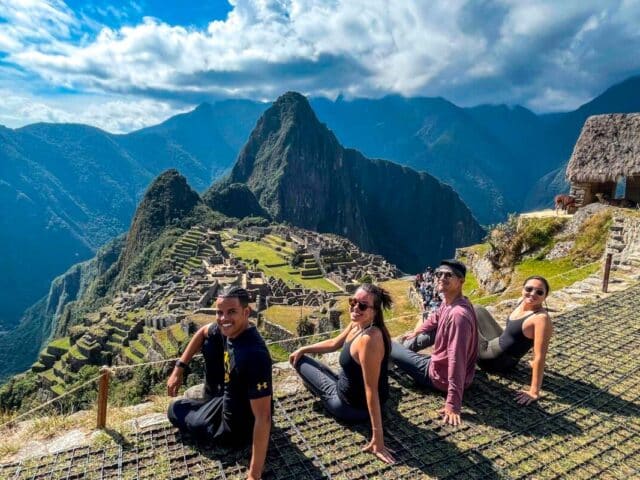
The Sacred Valley is a truly special place of the ancient Inca Civilization, with unbelievable landscapes, breathtaking views, home to picturesque communities, villages steeped in age-old traditions, colonial towns, and many important Inca Ruins & Archaeological Sites to visit, including Machu Picchu, that are internationally renowned in their own right, and one of the most important destinations in South America.
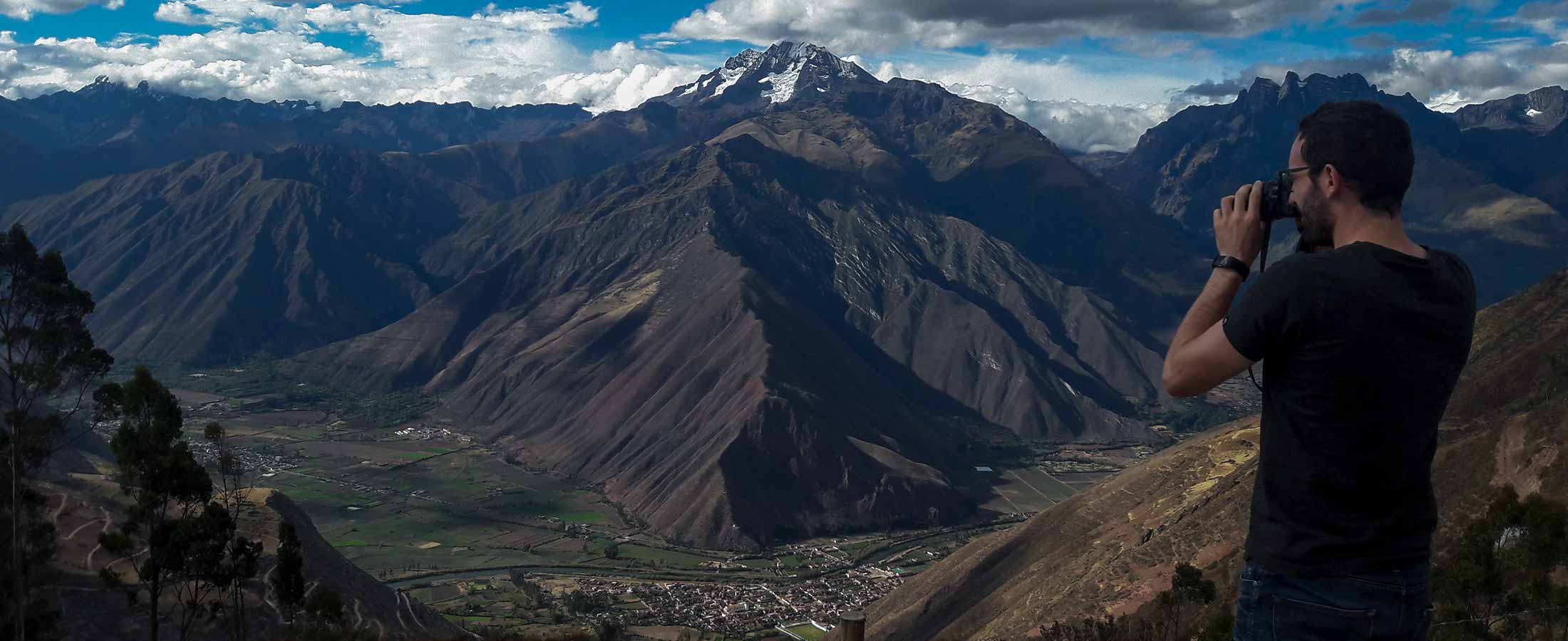
The Sacred Valley of the Incas is dominated by the imposing peaks of the Vilcanota mountain range, the valley has been the storehouse for agricultural products for the city of Cuzco since Inca times, and today is famous for being home to maize cobs, the sacred food of the Incas, with the largest kernels in the world. Although many people chose to take day trips and tours to the Inca heartland, we strongly recommend visiting the Sacred Valley with local experts and venture at your own pace. We put the private Sacred Valley tours itineraries that have been designed by Peru Spirit Adventure to give you an idea and help you plan your trip!
Overview
As the mid-way point between the ultra-popular destinations of Cusco and Machu Picchu, the Sacred Valley is a great place to rest up a while taking advantage at a lower altitude than Cusco, and acclimatize, before visiting Machu Picchu, or set off on the Inca Trail hike. The Sacred Valley is a highlight of any custom Peru tour, and highly recommended at least two days, to appreciate the grandeur and work of the Inca Civilization.
Today, the Sacred Valley draws visitors from all over the world to admire the array of the Inca ruins found here and it is also a thrilling hike & adventure activity hub. When you explore this verdant countryside and the villages, ruins. you can learn fascinating Inca facts and dive into the Andean lifestyle.
The Sacred Valley has five best places to visit. Pisac, Ollantaytambo, Moray, Salt Mines, Chinchero. Spend some time exploring one of the many ruins dotting the Incan land, or partake in a traditional earth oven meal, learn about the textiles that played an important role in Andean culture, and much more. Through any of these experiences, you’ll have a chance to meet the local people (and the local llamas) of the traditional villages and open your eyes to a truly enchanting world.
Sacred Valley Climate & Weather
The climate of the Sacred Valley highlands maintains relatively consistent temperatures throughout the year. Atop high mountain summits, like snow topped peaks of Veronica, Chicon, Pitusiray, and Sawasiray, temperatures are cold enough to sustain snow year round. The climate is much more temperate far below on the valley floor where towns such as Pisac, Yucay, Urubamba, Yanahuara, and Ollantaytambo reside.
Dry season is from April to October— The high season for the Sacred Valley because days are usually sunny with little chance of rain. Nights get really chilly, so make sure to bring a warm jacket. During these months, sunshine is regular with a minimal chance of rainfall, at night, temperatures drop significantly, Daytime Average: 68-72 F / Nighttime Average: 35-40 F.
Rainy season is from November to March— Is when the region receives heavy rains, but not necessarily every day. During the mornings, it’s generally cloudy with light showers and afternoons and evenings can bring heavier rains. Don’t forget your rain gear! Average daytime temperatures are typically mild, but you’ll still need that warm jacket at night. January and February usually receive the most rainfall. On average, nighttime temperatures are warmer in the rainy season, colder in the dry season, Daytime Average: 68-70F / Nighttime Average: About 45F.
Best Time to Visit the sacred Valley
The best time to visit Cusco and the Sacred Valley is in the dry season, which runs from April to October before the rains begin. Also, the peak travel season in Machu Picchu, Cusco, and the Sacred Valley is from June-August when tours and accommodation are usually booked out well in advance.
During the dry season, the weather is usually sunny, refreshing breezes and conveniently coincides with the annual summer break for travelers coming from the northern hemisphere (Europe and North America). Given the high demand for services and limited Machu Picchu train and entrance tickets, it’s best to plan your trip early to ensure specific date availability. In the dry season is easier to visit the ruins and undertake hikes outside of the rainy season. Cusco, Machu Picchu and the Sacred Valley have just two seasons – wet (summer) and dry (winter).
Low season coincides with the region’s rainy season: December, January, February, and March. Rainfall and storms are unpredictable, so flight delays going in and out of Cusco are more common. However, there are perks to traveling during the low rainy season. Sites tend to be less crowd and the Sacred Valley’s mountains are beautiful shades of green.
Geography & Map
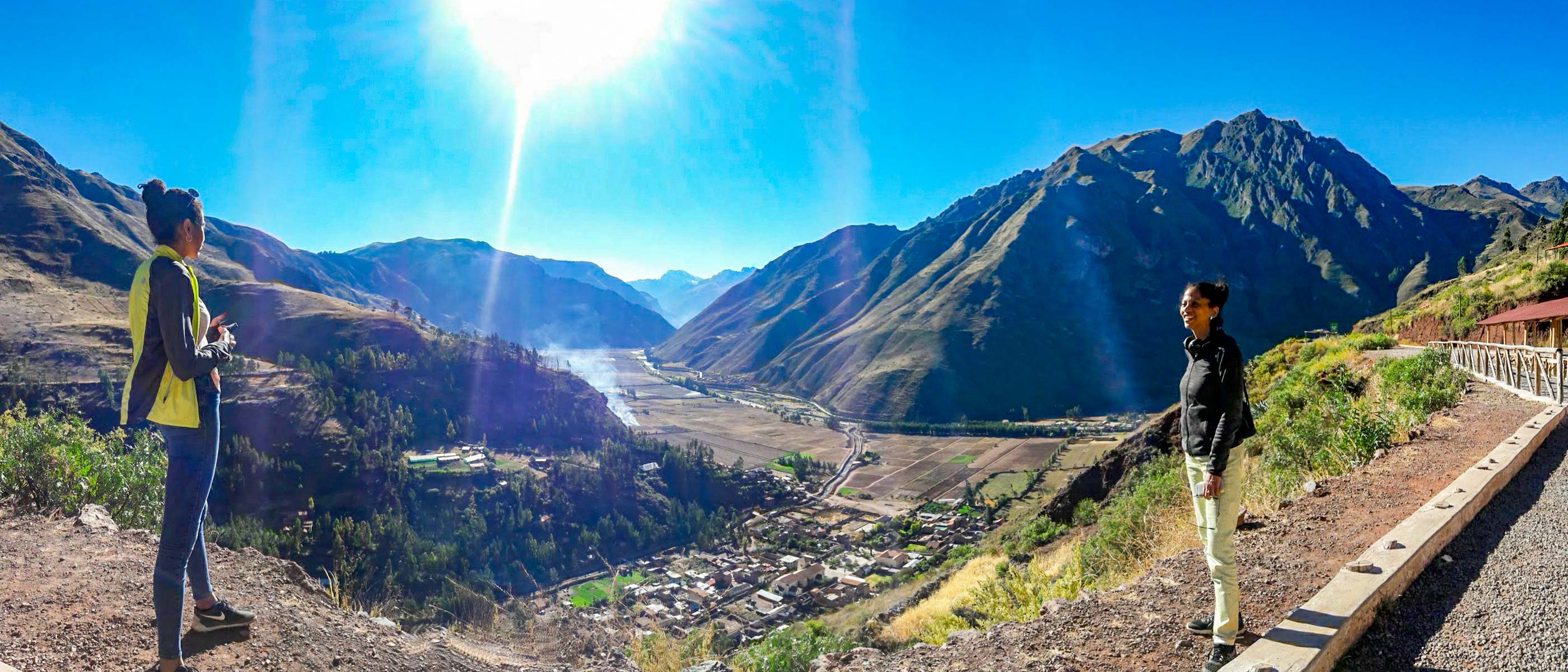
The Sacred Valley lies 32 kilometers from the city of Cusco, tacked between the skirts of lofty mountains through a narrow valley following the Urubamba River with fertile soils and abundant water supply, against a backdrop of snow-capped peaks at over 5,000 meters (16,400 ft), in the Peruvian Andes, the Sacred Valley of the Incas stretch from the town of Pisac to the Ollantaytambo, northwest of Cusco city, in the south of Peru, the Sacred Valley is over 100 kilometers (63 Miles) long. Elevations vary from 9,000 ft (2,790 m) on the valley floor to 16,000 ft (5,000 m) and above at the highest mountain summits. The Sacred Valley altitude is lower than that of Cusco’s, making it a wonderful place to acclimate.
- Elevation: 6,730-9,800 ft (2,050 – 3,000 m)
- Population: 65,000 aprox.
History of the Sacred Valley Peru
The history of the Sacred Valley is closely intertwined with the Inca capital of Cusco. The Inca Empire rose to power during the 14th century and expanded across ancient Peru and into Ecuador, Bolivia, Chile, Argentina and Colombia. However, all trails led back to the Inca capital city of Cusco where the king resided. The surrounding fertile fields of the Sacred Valley served as the civilization’s breadbasket, yielding varieties of fresh grains, fruits, and vegetables. Skilled Inca stonemasons also constructed religious temples and outposts in the valley, which today you can visit at archaeological sites in Pisac, Ollantaytambo, Moray, Maras Salt Ponds, and Chinchero.
Before the Incas, the Sacred Valley was inhabited by the Chanapata (small Andean communities) around 800 B.C. and then by the Qotacalla culture from 500 to 900 A.D., and later by the Killke culture from 900 A.D. until the Inca Empire began to inhabit the valley, around the 12th century, with Manco Capac as the first Inca king. The Spanish conquest of the valley began in 1531 when Francisco Pizarro arrived with 168 soldiers. In 1535 A.D., Manco Inca organized a rebel force to try to overthrow the Spanish rule, and led the biggest military victory of the Incas over the invading Spanish in Ollantaytambo.
Despite some victories, in 1572 the last Inca king, Tupac Amaru I, was captured in Vilcabamba and taken to Cusco. Upon the orders of the Viceroy Francisco Toledo, Amaru was beheaded in the city’s main plaza in front of a crowd of thousands. During the 16th-18th centuries, Cusco became an economic node of the southern Andes as well as the frontline for the religious evangelization and acculturation of indigenous populations. During this time, many churches are erected in the Sacred Valley.
In 1911, Yale historian and professor Hiram Bingham arrived at the ruins of Machu Picchu. National Geographic chronicles Bingham’s expedition and turns the world’s attention to this remote Andean region of Peru. In 1999 PeruRail began offering tourists train service to Machu Picchu. In 2004, Potato Park, or Parque de la Papa, was established to protect hundreds of native potato species and agrobiodiversity in the Sacred Valley region. Today, tourism in the Sacred Valley is on the rise, but local movements and projects are at work to help preserve ancient Quechua traditions.